We are enrolling! Join us in nurturing young minds, fostering creativity, and creating a brighter future. We're excited to introduce your child to a world of possibilities! Contact us today for details.
The weeks before kindergarten can bring a surprising number of questions.
Can my child follow classroom directions? Will they speak up when they need help? Should they already know how to read? Are they ready to be away from home for a longer school day?
Take a breath. Kindergarten readiness is not a race to complete a workbook. It is a growing combination of communication, curiosity, independence, social development, motor control, and early academic understanding.
Texas guidance recognizes that children develop at different rates. It also explains that readiness guidance should support developmentally appropriate learning rather than become a rigid assessment or checklist.
For families exploring kindergarten readiness in Frisco, the most effective preparation is often simple, consistent, and playful. The following seven skills can be practiced through ordinary moments at home and strengthened through a thoughtful Pre K experience.
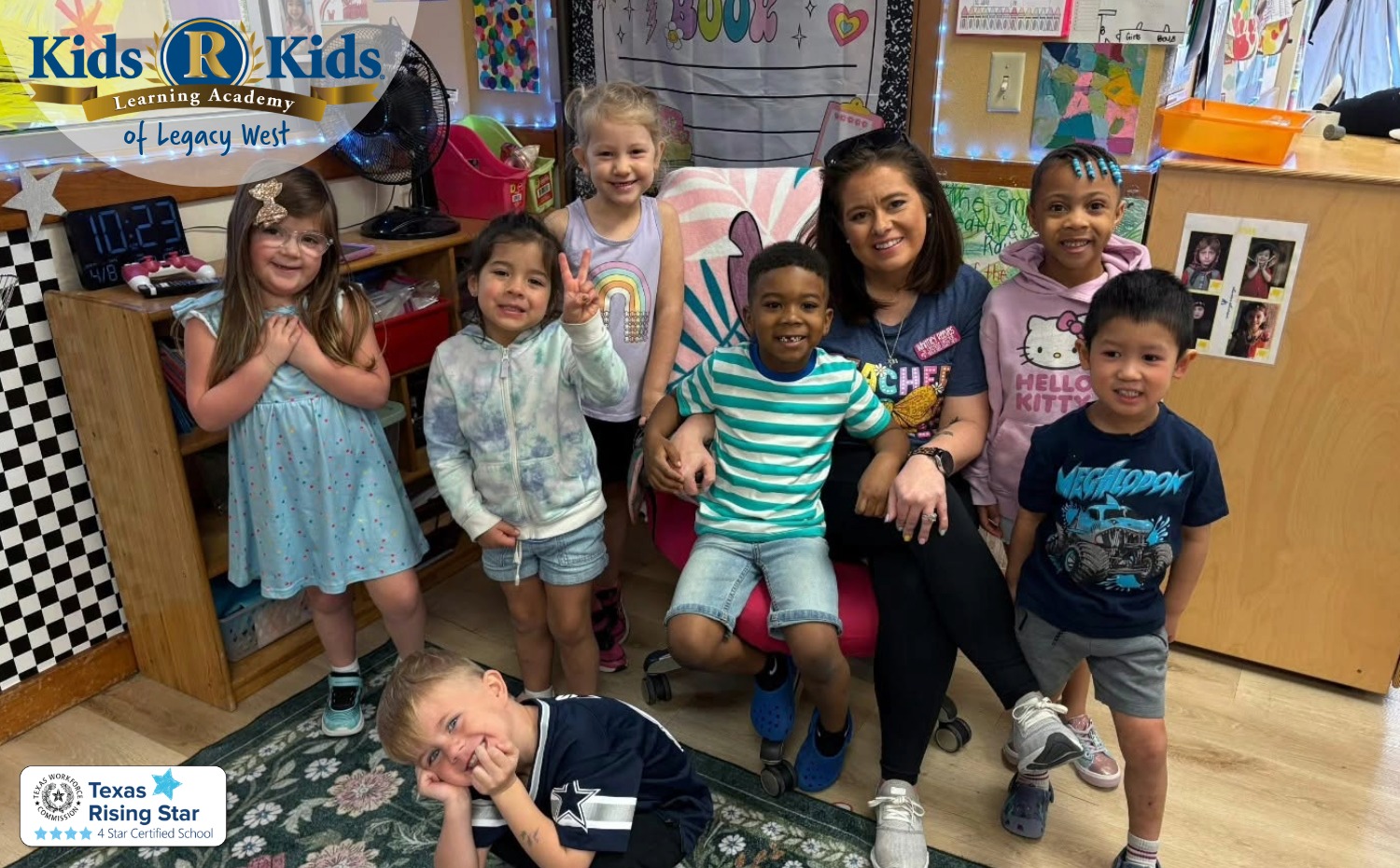
What Kindergarten Readiness Really Means
A child does not need to arrive at kindergarten knowing everything.
A school ready child is learning how to participate, communicate, try something unfamiliar, and continue after a mistake. Academic foundations matter, but confidence, self control, communication, and independence also influence how comfortably a child can join classroom life.
Use this guide as a flexible kindergarten readiness checklist, not a test. Choose one skill at a time and practice it through play, conversation, and daily routines.
1. Following Routines and Simple Directions
Kindergarten classrooms include frequent transitions. Children move from arrival to group time, learning centers, meals, outdoor play, and cleanup.
Your child does not need perfect attention. It helps when they can hear a simple direction, begin the task, and move to the next activity with reasonable support.
Try this at home
Give a clear two step direction:
“Please place your cup in the sink and bring your shoes.”
Allow time for your child to process and respond. Avoid repeating the direction immediately unless they appear confused.
A simple picture routine can also help. Use pictures for getting dressed, eating breakfast, brushing teeth, packing a bag, and putting on shoes. Predictable routines build independence while reducing morning stress.
2. Communicating Needs and Ideas
Children feel more secure when they can explain what they need.
Useful communication includes telling an adult when they need the restroom, asking for help, explaining that something hurts, joining a conversation, and sharing an idea during group activities.
Communication also includes listening. Children benefit from practicing how to wait for a speaker, respond to a question, and remain engaged in a short conversation.
Try this at home
Ask open questions that require more than yes or no.
“What was the most interesting part of your day?”
“What do you think will happen next in this story?”
“How could we solve this problem?”
Give your child enough time to organize an answer. The goal is confident expression, not perfect grammar.
3. Building Early Literacy Foundations
A child does not need to read independently before kindergarten.
Early literacy begins with enjoying books, recognizing that print carries meaning, noticing letters, hearing rhymes, understanding stories, and becoming curious about sounds.
Helpful early literacy skills can include recognizing their own name, identifying some letters, noticing the first sound in familiar words, holding a book correctly, and retelling part of a story.
Try this at home
Read together for ten minutes each day.
Pause occasionally and ask your child to predict what may happen next. Invite them to find the first letter in their name. Ask them to describe a picture or retell the story in their own words.
Keep reading relaxed. A positive relationship with books is more valuable than turning every page into a quiz.
4. Exploring Early Math in Everyday Life
Early math is already present in a child’s day.
Children use math when they count crackers, compare cup sizes, sort toys, notice patterns, recognize shapes, or decide which group has more.
These experiences help children understand quantity, sequence, comparison, position, and problem solving.
Try this at home
Ask your child to sort laundry by color or size.
Count the steps from the bedroom to the kitchen.
Create a simple pattern using blocks or snacks.
Compare two containers and ask which one may hold more.
Use position words such as above, below, beside, behind, and between.
These kindergarten preparation activities build understanding without requiring worksheets.
5. Strengthening Fine Motor and Self Care Skills
Fine motor skills for kindergarten support writing, drawing, cutting, opening containers, turning pages, building with small materials, and managing clothing.
Children also gain confidence when they can complete simple self care tasks with less adult assistance.
Try this at home
Offer crayons, washable markers, play dough, child safe scissors, puzzles, building pieces, and kitchen tongs.
Let your child practice buttons, zippers, lunch containers, backpacks, and water bottles. These tasks may take longer at first. Give them time to attempt the task before stepping in.
Progress matters more than a perfect pencil grip or perfectly cut line.
6. Practicing Social and Emotional Skills
Social emotional skills for kindergarten help children participate in a group.
Useful skills include taking turns, waiting briefly, naming feelings, accepting that they may not always go first, and using words during a disagreement.
Children also need practice recovering when something does not go as expected. A missing toy, a difficult puzzle, or a changed plan can become an opportunity to learn how to pause and try again.
Try this at home
Use pretend play to practice common classroom moments.
“What could you say if someone is using the toy you want?”
“What can you do when you feel frustrated?”
“How could you ask to join the game?”
Teach short phrases such as:
“Can I have a turn next?”
“I need help.”
“I feel upset.”
“Can we solve this together?”
7. Growing Independence and Classroom Confidence
Independence does not mean doing everything alone. It means being willing to try, knowing when to ask for help, and feeling increasingly comfortable with familiar responsibilities.
A child may practice carrying a backpack, putting belongings in one place, washing hands, managing restroom routines, opening part of a lunch, and separating from a caregiver.
Try this at home
Give your child one dependable daily responsibility.
They might place their water bottle in a bag, choose a book for the evening, put shoes by the door, or help prepare a snack.
Use encouraging language:
“You worked through that.”
“You remembered the next step.”
“You asked for help clearly.”
This builds confidence around effort and problem solving rather than perfection.
A Simple Fourteen Day Kindergarten Readiness Routine
You do not need to practice every skill every day. Ten focused minutes can be enough.
Days one through three: Practice the morning picture routine and one two step direction.
Days four through six: Read together and ask your child to predict, describe, and retell.
Days seven through nine: Count, sort, compare, and create patterns using familiar household objects.
Days ten and eleven: Practice crayons, play dough, buttons, zippers, and opening lunch items.
Days twelve and thirteen: Use pretend play to practice asking for help, taking turns, and managing frustration.
Day fourteen: Practice a calm school morning from waking up through putting on the backpack.
Repeat any activity your child enjoys. Familiarity and consistency are more useful than rushing through every item.
How a Strong Pre K Program Supports Readiness
A purposeful Pre K classroom gives children repeated opportunities to practice these skills with teachers and peers.
Look for a program that combines guided learning, purposeful play, conversation, movement, creative work, learning centers, outdoor experiences, and predictable routines.
During a tour, ask how teachers support classroom transitions, early literacy, early math, emotional regulation, independence, and family communication. Ask to see how children interact with teachers and how learning is built into the classroom environment.
Parents searching for Pre K in Frisco should also consider whether the program respects individual development. Readiness should help children become more confident and capable, not make them feel pressured to perform beyond their developmental stage.
Questions to Ask During a Pre K Tour
Ask how teachers help children adjust at arrival.
Ask how literacy and math are included in play.
Ask how children practice problem solving with classmates.
Ask how teachers communicate progress and concerns.
Ask how the school supports safety, secure entry, and family connection.
Ask whether you can see the classroom, meet members of the team, and understand a typical day.
The answers should be specific. A strong program should be able to show how learning happens rather than relying only on broad promises.
Small Steps Create a Strong Beginning
Kindergarten readiness grows through hundreds of ordinary moments.
It grows when a child finishes a routine, explains an idea, listens to a story, counts real objects, opens a lunch container, works through frustration, and asks for help.
Start with the skill your child needs most. Keep the practice encouraging and manageable. Confidence grows when children are allowed to try, make mistakes, and try again.
See Kindergarten Readiness in Action
Families looking for a preschool near Legacy West can visit Kids ‘R’ Kids Learning Academy of Legacy West at 5365 Lebanon Road in Frisco, Texas 75034.
The school is open from 6:30 a.m. to 6:00 p.m. Families can tour the academy, explore its Preschool and Pre K programs, and ask about the Discovery Day experience. Call 469 287 3185 or use the online tour and contact form.