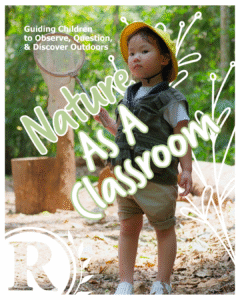
Kids are naturally curious. They notice tiny details adults often miss, ask big questions, and find wonder in every leaf, pebble, and puddle. When we treat the outdoors as a classroom, we give children the freedom to investigate, observe, and learn in ways that support their whole development.
The Great Outdoors is Your Kid’s Classroom
Fresh air and open spaces give children room to move, experiment, and use all their senses. Outdoor play strengthens physical health, but it also supports thinking skills, language development, and emotional resilience. When children are free to climb, dig, examine bugs, or watch clouds drift across the sky, they build problem-solving skills, confidence, and a deeper connection to the natural world.
Research on outdoor learning consistently shows that natural spaces encourage children to be more focused, imaginative, and collaborative. Whether it’s a backyard, school playground, or neighborhood park, time in nature invites children to follow their curiosity and explore at their own pace.
Observation Begins with Simple Moments
Observation skills grow through repeated small experiences. Children learn a tremendous amount just by noticing patterns: shadows that change as the sun moves, new sprouts after a rainy day, or how birds behave at different times of day.
You can support observation by asking open-ended questions like:
- “What do you notice?”
- “What changed since yesterday?”
- “What do you think will happen next?”
These questions invite children to slow down and tune into details, nurturing early scientific thinking.
Exploration Builds Confidence and Curiosity
Outdoor spaces naturally encourage exploration. Uneven ground, rocks of different sizes, sticks, mud, flowers, and insects offer endless opportunities for children to test ideas and make discoveries. Studies of natural playspaces show that children engage in more diverse play — problem-solving, imaginative scenarios, teamwork, and sustained attention — when they have access to natural materials rather than only fixed playground equipment.
Exploration doesn’t need elaborate setups. A simple walk, a basket for collecting nature treasures, or a shallow container of water for floating objects can spark hours of meaningful learning.
Spring Brings Ready-Made Learning Opportunities
Spring is full of hands-on STEM experiences. Children can observe plant growth, track weather changes, compare textures, hear birdsongs, and watch insects return. Activities, like sprouting seeds, building simple nature sculptures, or exploring puddle formations, help children understand basic science concepts while having fun.
Even brief outdoor routines — such as looking for signs of spring each morning — help children tune into seasonal change and develop a sense of wonder.
Connection, Confidence, and Discovery
Time outdoors helps children feel grounded and connected — to nature, to their peers, and to themselves. As they test boundaries, explore new environments, and ask questions, they grow braver, more observant, and more confident in their abilities.
Spring is a season of discovery. When we encourage children to explore the outdoors, notice its details, and follow their curiosity, we help them learn in ways that no indoor activity can fully replace. Nature becomes their classroom, and every day brings something new to observe, question, and explore.
Sources
Naeyc, Rocking and Rolling. Fresh Air, Fun, and Exploration: Why Outdoor Play Is Essential for Healthy Development. – Unicef, The importance of outdoor play (and how to support it). – Children & Nature Network, Learning Outside. – Science Direct, The importance of outdoor play for young children’s healthy development. – NLM, 2025 Position statement on active outdoor play. – Encyclopedia on Early Childhood Development, The Influence of Outdoor Play on Social and Cognitive Development. – NLM, Playing in ‘The Backyard’: Environmental Features and Conditions of a Natural Playspace Which Support Diverse Outdoor Play Activities among Younger Children. – Children’s Hospital of Philadelphia, The Benefits of Outdoor Play: Why It Matters. – Treehouse Schoolhouse, 13 Spring STEM Nature Activities for Kids.