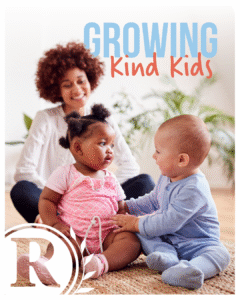
It’s the time of year when we celebrate love and kindness — in particular, Valentine’s Day. The holiday isn’t just about cards and treats; it’s a celebration of connection. February is the perfect time to help kiddos explore kindness, understand feelings, and practice empathy in simple, meaningful ways. Research shows that empathy begins emerging in the earliest years of life and continues developing through childhood. When adults intentionally nurture it, children become more caring, thoughtful, and community-minded.
What Kindness Means to Kids
Kids don’t think of kindness in abstract terms. To them, kindness looks like helping, sharing, comforting, and including someone. Those are the themes researchers hear again and again when kids describe what it means to be kind.
So when you point out these moments in real time, something magical happens — kids begin to recognize kindness as an action, not just a word.
Try casually noticing out loud:
- “You helped your friend find their jacket — that was really thoughtful.”
- “You invited your sister to play. I bet that made her feel included.”
A little acknowledgment goes a long way.
Empathy Begins with Feelings
For kids to treat others with care, they first need to understand feelings — their own and everyone else’s. Empathy develops step by step:
- Recognize what they’re feeling
- Notice what others might be feeling
- Respond with care
Even toddlers are already working on Step 1, and young kids light up the same parts of the brain adults use when they see someone else experiencing an emotion. Pretty amazing, right?
Here are some simple ways to help feelings come into focus:
- Talk about characters’ emotions during storytime
- Pause to notice facial expressions throughout the day
- Add quick “feelings check-ins” to meals or transitions
Small steps build strong emotional muscles.
Modeling Empathy
One of the most powerful ways kids learn empathy is by watching the adults around them. Your everyday actions — thank-yous, check-ins, sincere apologies — are the emotional blueprint they follow.
A few phrases to keep in your pocket:
- “I’m sorry I raised my voice. I was frustrated, and I’m working on calming down.”
- “Should we check on our neighbor? She seemed a little stressed earlier.”
Children mirror what they see. When adults practice empathy openly, kids absorb it naturally.
Practice Makes Kindness Stick
Kindness grows through repeated opportunities. Parenting experts all highlight that when children practice small, caring behaviors regularly, empathy becomes a natural part of their identity.
Try building these habits:
- Daily kindness moment: Encourage one act of kindness each day.
- Helpfulness jobs: Tasks like setting the table build responsibility
- Self-kindness first: Self-compassion supports compassion for others.
Community Makes It Meaningful
Kids are more motivated to be kind when they feel connected to the people around them. That’s why small community projects can be so powerful.
Try:
- Making cards for a retirement home
- Delivering drawings to neighbors
- Starting a “kindness chain” where each act becomes a new link
When kids see their actions affecting others, kindness becomes meaningful — not just something adults talk about.
Sources
National Library of Medicine, Young Children’s Conceptualisations of Kindness: A Thematic Analysis. – Parenting Matters Blog, Encouraging Kindness and Empathy in Children. – TCM, The Importance of Modeling Kindness and Empathy. – NLM, Neural Correlates of Empathy in Boys With Early Onset Conduct Disorder. – Psychology Today, How Children Develop Empathy. – Michigan State University, Children and empathy: Kindness. – UNICEF, How empathizing develops and affects well-being throughout childhood. – Science Direct, Empathy development from birth to three: Advances in knowledge from 2000 to 2025. – The Everymom blog, How to Raise Kind Kids. – Whole Child Counseling, Valentine’s Day SEL Activities: Social Emotional Learning on Self-Compassion and Kindness.