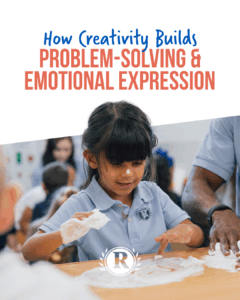
Unstructured creativity is the unsung hero of childhood. So often, we establish rules and boundaries for our children (which are necessary for their development), but allowing our kids and, by extension, ourselves to take a step back to let creativity flourish, greatly influences a child’s cognitive development, social-emotional skills, and problem-solving capabilities. Sometimes, letting go is the best thing we can do for our kids.
Creativity as a Problem-Solver
When children are confronted by a problem, using creativity can not only aid in solving whatever the issue is but also teach them important life skills. Not every problem needs to be detrimental; oftentimes, problems can help us grow into the people we are today.
Children can solve problems creatively in a few different ways:
Making Good Choices
When kids are faced with a problem, they are also faced with choices. Some choices may be better than others, or there may be multiple solutions to an issue. What matters is that kids make the best choice for themselves and for others. This is an important lesson to learn. Even as adults, we may make difficult choices that work well for others but not for ourselves or vice versa. This choice-based decision making also teaches kids healthy compromises.
Environmental Stimulus
When kiddos have to think creatively on how to solve a problem, naturally, environmental stimuli is introduced. Kids can problem-solve by reviewing their surroundings. For example, if you need to wash your hands and you can’t reach the sink, how will you wash your hands? Is there a step stool close? Is there another sink that is shorter? Using creativity to think differently about a situation and using different tools at their disposal can develop skills that kiddos can use in a variety of situations in the future.
Creativity Begets Creativity
The more children learn to think creatively, the more they can apply that creativity to everyday problems and situations. Interpersonal relationships, workplace dynamics, and day-to-day problem-solving can only be enhanced by creative thinking.
Safety in Expression
Kiddos who are free to express their creativity feel safer and happier. They often lack the ability to express themselves with words, so whether it’s acting, dancing, sculpture-making, or other art forms, kids can use creativity to say what words often cannot.
Creativity also encourages empathy. When working together to solve a problem, children can figure out each other’s different skillsets and use them where applicable. This group mentality of working towards a goal encourages these little humans to work towards the greater good, something we should all be doing, big or small.
Sources
Fox Child & Family Therapy, Helping Kids Process Big Feelings Through Creative Expression. – NC State Extension, Child Development: Creativity in Young Children. – McGraw Hill, How Unstructured Play Fosters Problem-Solving, Creativity, and Critical Thinking.