We are enrolling! Join us in nurturing young minds, fostering creativity, and creating a brighter future. We're excited to introduce your child to a world of possibilities! Contact us today for details.
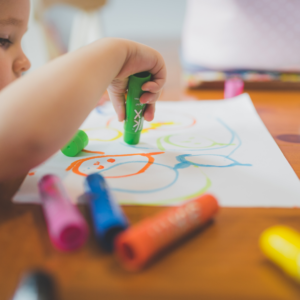 Families sometimes wonder whether preschool is truly necessary or simply a helpful option before kindergarten. Research suggests that high-quality preschool can support children’s cognitive, language, social-emotional, and self-regulation skills while building a foundation for future learning. The quality of the preschool experience matters, too.
Key Takeaways
- High-quality preschool supports the academic, social-emotional, and self-regulation skills children use throughout their school years.
- Preschool learning happens through much more than academics, including play, relationships, conversation, exploration, and everyday routines.
- Research shows that what children experience in preschool matters, making program quality an important consideration for families.
Does Preschool Really Make a Difference?
Yes. Studies of early childhood development and high-quality early learning programs show that positive experiences during the early years can support children’s development and school readiness.
positive experiences during the early years can support children’s development and school readiness.
Preschool is not simply about getting a head start on worksheets, letters, or numbers. Young children learn through play, conversation, movement, exploration, and interactions with the people around them. A thoughtfully designed preschool program brings these experiences together so children can practice a wide range of skills in meaningful ways.
Research from the Center on the Developing Child at Harvard University explains that early experiences help shape brain development and the foundational capabilities children use throughout life. Executive function and self-regulation skills—including focusing attention, remembering information, managing behavior, and adapting to new situations—develop through interactions and practice.
That means an ordinary preschool moment can have more value than it first appears. When a child listens to a story, works with a classmate to build a block structure, follows a classroom routine, or tries again after something doesn’t work, they are developing skills that extend beyond that individual activity.
What Does Research Say About the Long-Term Benefits of Preschool?
Research on high-quality early childhood programs has found associations with positive educational and developmental outcomes, and some intensive preschool programs have demonstrated benefits that extend well beyond the early years.
One of the best-known examples is the Perry Preschool Study, a longitudinal study that followed children who participated in a high-quality preschool program. By age 40, researchers reported differences in areas including high school graduation, employment, earnings, and other life outcomes among participants.
However, these findings need context. The Perry Preschool program was a specific, intensive intervention serving a particular population, so its results should not be treated as a guarantee that every preschool program will produce the same long-term outcomes.
The broader lesson is more useful for families: early childhood experiences can have lasting importance when children receive intentional, high-quality support during these formative years. Preschool does not guarantee a particular future, but it can give children a strong foundation for continued learning and development.
What Skills Does Preschool Help Children Develop?
Preschool helps children develop academic, communication, social-emotional, and independence skills that support learning both inside and outside the classroom.
Children may practice recognizing letters and sounds, counting, sorting, identifying patterns, listening to stories, and expressing their ideas. At the same time, they are learning how to follow directions, wait for a turn, solve problems, communicate their needs, manage frustration, cooperate with classmates, and take responsibility for simple tasks.
These skills work together. A child who can listen to instructions, communicate when they need help, regulate their emotions, and work cooperatively with others is better positioned to participate in classroom learning. Research on executive function and self-regulation supports the importance of developing these abilities through age-appropriate practice and interaction.
Consider a simple group activity. Building a tower with classmates might involve counting blocks and exploring shapes, but it can also require children to share materials, communicate ideas, take turns, solve disagreements, and keep trying when the structure falls. A story can build vocabulary and comprehension while also helping children recognize emotions and understand another person’s perspective.
This is why meaningful preschool education focuses on the whole child. Children need opportunities to develop early academic knowledge, but they also need repeated practice with the social, emotional, physical, and practical skills that help them become confident learners.
Does the Quality of a Preschool Program Really Matter?
Yes. Research on early childhood development emphasizes that the quality of children’s relationships, experiences, and learning environments can influence how they develop, making program quality an important consideration for families.
For families comparing programs, that means looking beyond whether a center offers preschool and asking what children actually experience throughout the day. Families may want to consider whether teachers are responsive and engaged, whether activities are developmentally appropriate, and whether children have meaningful opportunities to explore, communicate, play, and solve problems.
A strong preschool environment also provides consistent routines while leaving room for curiosity and creativity. Children benefit from knowing what to expect, but they also need opportunities to make choices, ask questions, experiment, interact with others, and discover new interests.
At Kids ‘R’ Kids Learning Academy of Matthews, these principles come together through an early learning environment designed to support children across multiple areas of development. Children have opportunities to build foundational academic skills while also developing communication, independence, confidence, and positive relationships.
For families evaluating preschool programs, the goal is not simply to find a place where a child can learn letters or numbers. It is to find an environment where children are known, supported, challenged appropriately, and given opportunities to grow.
So, Does Preschool Really Matter?
Yes, preschool can matter—but what children experience during those preschool years matters just as much. Research suggests that high-quality early childhood education can support foundational academic, communication, social-emotional, and self-regulation skills while helping children develop positive attitudes toward learning.
For families preparing for kindergarten, preschool does not have to be about pushing children ahead. It can be about giving them the relationships, guidance, routines, and experiences they need to grow at their own pace and become increasingly confident and capable.
If your family is looking for a preschool program that takes both learning and development seriously, Kids ‘R’ Kids Learning Academy of Matthews can help you explore what a high-quality early learning experience looks like. Learn more about the school’s programs and approach at Kids ‘R’ Kids Learning Academy of Matthews.