Is Your Child Ready for Kindergarten? A Practical Parent Checklist
“Is my child ready for kindergarten?” is one of the most common questions families ask during the preschool and Pre K years.
It is easy to focus only on whether a child can recognize letters, write a name or count to a certain number. Those skills can be helpful, but kindergarten readiness is much broader.
Readiness includes communication, curiosity, early literacy, mathematical thinking, physical development, social skills, emotional regulation, independence and the ability to participate in classroom routines.
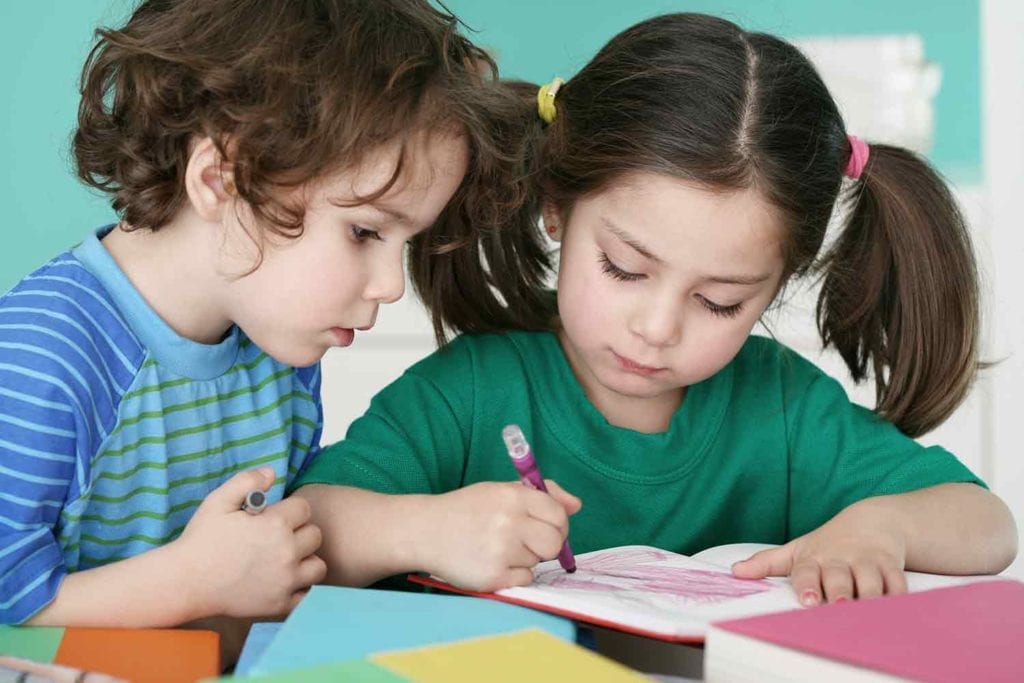
The Texas Prekindergarten Guidelines and the Head Start school readiness framework both describe learning across several connected developmental areas. They also recognize that children develop at different rates and bring different experiences into the classroom.
This checklist is not a pass or fail test. It is a practical way to notice the skills your child is developing and identify areas that may benefit from more practice.
1. Your Child Can Communicate Basic Needs
A kindergarten classroom includes conversations, directions, questions and group discussions.
A child who is becoming ready for kindergarten may be able to:
• Tell an adult when help is needed
• Express basic thoughts and feelings
• Answer familiar questions
• Listen while another person is speaking
• Describe a recent experience
• Participate in a short conversation
Clear speech is not the only measure. The important point is that the child is increasingly able to communicate and understand others.
2. Your Child Can Follow Familiar Directions
Kindergarten includes many transitions, such as moving from a table activity to a group lesson, cleaning up materials or preparing to go outside.
Children benefit from practicing simple directions such as:
“Put the book away and sit on the carpet.”
“Wash your hands and bring your cup.”
“Choose a crayon and write your name.”
Following a familiar two step direction shows that a child is developing listening, memory and self regulation.
3. Your Child Is Learning to Participate With Others
Children do not need to manage every social situation perfectly before kindergarten.
Readiness means they are beginning to practice skills such as:
• Taking turns
• Sharing classroom materials
• Joining group play
• Asking before taking something
• Listening to another child
• Using words to solve a disagreement
• Accepting help from a teacher
Social and emotional development is an essential part of school readiness because it helps children form relationships and participate in learning.
4. Your Child Can Move Through Routines With Support
Starting kindergarten brings new schedules, adults, expectations and classmates.
A child may still feel nervous or need reassurance. Readiness does not mean never crying or becoming frustrated.
Look for gradual growth in the ability to:
• Separate from a caregiver with support
• Move between activities
• Wait briefly for a turn
• Calm down after a disappointment
• Try again when something is difficult
• Accept a change in the daily routine
These skills develop through repeated practice, predictable routines and supportive relationships.
5. Your Child Shows Curiosity and Persistence
A ready learner does not need to know every answer.
Curiosity, attention and willingness to try are often more valuable than memorizing isolated facts.
You may notice your child:
• Asking why and how questions
• Exploring how objects work
• Trying more than one solution
• Returning to an unfinished activity
• Making predictions during a story or experiment
• Showing pride after completing a challenge
Approaches to learning include initiative, curiosity, creativity and self regulation. These behaviors influence how children engage with academic experiences.
6. Your Child Enjoys Books and Language
Children do not have to read independently before kindergarten.
Helpful early literacy behaviors include:
• Choosing books to look through
• Listening to a story
• Retelling part of a familiar story
• Recognizing some letters
• Noticing rhyming words
• Identifying some beginning sounds
• Understanding that print carries meaning
• Attempting to write or copy a name
Reading together and talking about stories can be more valuable than pressuring a child to memorize long word lists.
7. Your Child Explores Early Math
Early math appears in everyday activities long before formal worksheets.
A child may show growing mathematical understanding by:
• Counting real objects
• Comparing more and less
• Recognizing simple shapes
• Sorting items by size or color
• Continuing a basic pattern
• Understanding first and last
• Talking about distance, weight or size
• Using numbers during play
Cooking, setting the table, organizing toys and playing board games can all create natural opportunities for mathematical thinking.
8. Your Child Is Developing Fine and Gross Motor Control
Kindergarten classrooms include writing, drawing, cutting, building, outdoor play and movement.
Useful skills include:
• Holding crayons and pencils with increasing control
• Drawing basic shapes and figures
• Using child safe scissors with supervision
• Building with blocks
• Turning book pages
• Running, jumping and balancing
• Carrying personal belongings
Children develop these skills at different rates. Regular opportunities to draw, build, move and play help strengthen coordination.
9. Your Child Is Becoming More Independent
Growing independence can make the kindergarten transition easier.
Children may practice:
• Washing and drying their hands
• Putting belongings in the correct place
• Opening familiar food containers
• Cleaning up after an activity
• Putting on a jacket
• Asking for bathroom help when needed
• Recognizing personal belongings
A child does not need complete independence. The goal is steady progress and confidence with familiar routines.
What Your Child Does Not Need to Master Before Kindergarten
Your child does not need to:
• Read books independently
• Write perfectly formed sentences
• Complete long worksheets
• Count to an unusually high number
• Sit silently for extended periods
• Manage every emotion without help
• Know everything that will be taught in kindergarten
Kindergarten exists to help children continue learning. Readiness is a foundation, not a finished result.
Simple Kindergarten Readiness Activities at Home
Families can support readiness through ordinary routines.
Read together and ask your child what may happen next.
Count socks, stairs, toys or pieces of fruit.
Practice two step directions during cleanup.
Invite your child to draw, color, build and cut with supervision.
Play games that involve waiting for a turn.
Talk about feelings and possible ways to calm down.
Let your child help set the table, sort laundry or organize toys.
Encourage effort by saying, “You kept trying,” rather than focusing only on whether an answer was correct.
How Preschool and Pre K Support Kindergarten Readiness
A thoughtful preschool or Pre K environment gives children repeated opportunities to practice early academic, social, emotional and physical skills within a group.
At Kids ‘R’ Kids Learning Academy of West McKinney, preschool and Pre K experiences include language and literacy, math, science, writing, art, construction, dramatic play, problem solving, classroom routines and social learning.
Children learn through teacher guidance, hands on exploration, independent activity and collaboration with classmates. Families can then explore the academy’s private kindergarten program when their child is ready for the next stage.
Take the Next Step
Every child’s development is individual. Speak with your child’s teacher about current strengths, developing skills and areas where additional practice may be useful.
Families considering preschool, Pre K or private kindergarten in West McKinney are invited to schedule a tour of Kids ‘R’ Kids Learning Academy of West McKinney.
Families considering preschool, Pre K or private kindergarten in West McKinney are invited to SCHEDULE A TOUR and meet our academy team.
Learn More: