7 Preschool Readiness Skills for a Confident Start in Richardson TX
For many families, preschool readiness in Richardson TX starts with one important question: Is my child ready for preschool?
With Richardson ISD beginning the 2026 to 2027 school year on August 12, 2026, this is a timely moment for families to strengthen routines, confidence, and classroom readiness.
Preschool readiness is not about reading before everyone else, counting the highest, or sitting perfectly still. It is a growing ability to communicate, join simple routines, build relationships, explore ideas, and recover from small frustrations with adult support.
Children develop at different rates, so these skills are signs of progress, not a test.
For parents searching for a preschool in Richardson TX, the goal is to find a program that sees the whole child. Strong early learning supports language, thinking, movement, independence, and social and emotional growth together.
Play gives children a meaningful way to practice all of these abilities while staying curious and engaged.
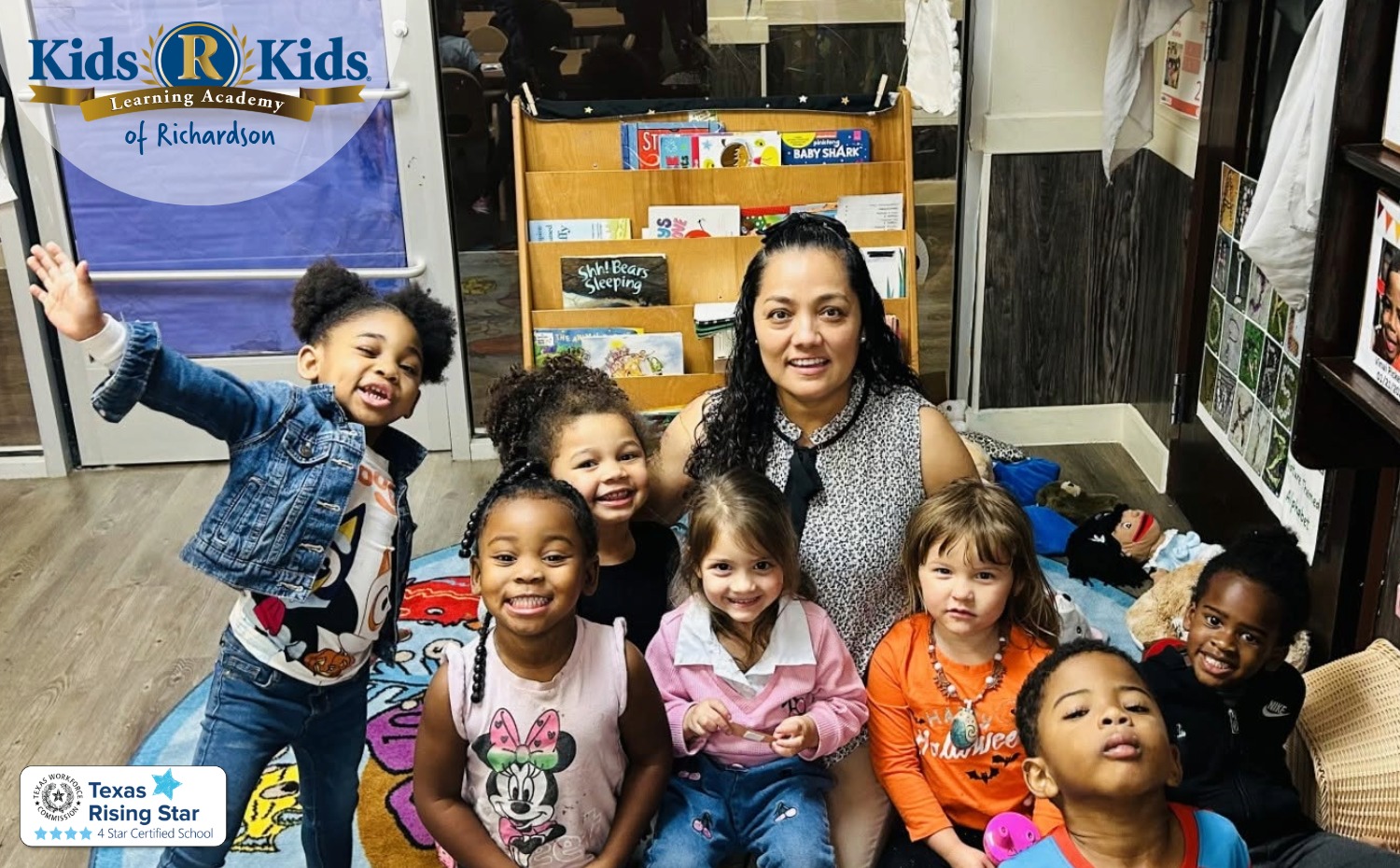
1. Communicating Needs, Feelings, and Ideas
A child does not need perfect pronunciation to be ready for preschool. What matters is a growing ability to connect with other people.
Your child may use words, gestures, facial expressions, or pictures to ask for help, make a choice, name a feeling, or share an idea. They may tell a short story about something that happened or respond to a simple question about a book.
Try this at home: Offer two real choices and give your child time to answer. During story time, ask what happened, what a character might be feeling, or what could happen next. A quiet pause gives children room to find their own words.
2. Following Simple Routines
Preschool days include many small transitions. Children move from arrival to play, from play to cleanup, from hand washing to meals, and from active learning to quieter moments.
Readiness can look like responding to a simple direction with reminders, putting a toy away, carrying a cup to the sink, or moving to the next activity after a familiar song.
The goal is not instant obedience. It is learning what comes next and beginning to participate.
Try this at home: Use clear first and then language. Say, first shoes, then book. Keep morning and bedtime routines consistent. Let your child complete one familiar step without rushing in to do it for them.
3. Growing Everyday Independence
Confidence grows when children have safe opportunities to try.
A preschooler may begin carrying a backpack, opening a lunch container, putting on a jacket, cleaning a small spill, washing hands, or choosing materials for an activity.
Every child will still need help. The important skill is the willingness to begin, keep trying, and ask for support when needed.
Try this at home: Give your child one daily responsibility, such as placing napkins on the table or putting a book in a bag. Choose clothing and containers that are easy to manage. Allow a little extra time so practice does not feel like pressure.
4. Playing and Working With Other Children
Social confidence develops through many small experiences. Children practice playing beside others, joining a game, taking turns, sharing materials, solving a disagreement, and noticing how another person feels.
A child does not need to share instantly or handle every social moment alone. Preschool is where these skills continue to grow with caring adult guidance.
Try this at home: Build a block tower together, roll a ball back and forth, or play a simple game with turns. Model useful phrases such as, can I have a turn when you are finished, may I play too, and let us build it together.
5. Managing Big Feelings With Support
Preschool readiness does not mean a child never cries, becomes frustrated, or misses a parent.
It means they are beginning to recognize feelings, seek help from a trusted adult, accept comfort, and try a simple calming strategy.
Children may use words such as mad, sad, worried, or excited. They may take a breath, hold a comfort item, sit in a calm space, or reconnect with an activity after reassurance.
Try this at home: Name feelings without judgment. Practice slow breathing when your child is already calm. Create a brief and consistent goodbye routine so separation feels predictable rather than uncertain.
6. Staying Curious and Solving Problems
Curiosity is one of the strongest foundations for learning. Preschoolers benefit from opportunities to wonder, test an idea, make a mistake, adjust, and try again.
These experiences also exercise executive function, the set of abilities that helps people focus attention, plan, manage information, and switch from one task to another.
Try this at home: Offer blocks, cups, puzzles, loose parts, crayons, water, or play dough. Ask open questions such as, what do you notice, what could make it taller, and what else could work.
Wait before giving the solution. The thinking matters more than a perfect result.
7. Building Early Literacy and Number Sense Through Play
Early literacy begins with conversation, stories, songs, rhymes, drawing, and noticing print.
Early math begins with counting real objects, comparing sizes, sorting, matching, measuring, and finding patterns.
Your child may begin to recognize their name, retell part of a familiar story, scribble with purpose, count a small group of objects, or notice that two items are different shapes.
These are meaningful beginnings. Worksheets and memorized answers are not the only signs of learning.
Try this at home: Count steps, sort laundry, compare grocery items, look for letters on signs, follow a simple recipe, and read together every day.
Keep the experience conversational. Children learn more when they feel involved, not tested.
What Preschool Readiness Does Not Require
Your child does not need to read independently.
Your child does not need to write every letter.
Your child does not need to count to one hundred.
Your child does not need to sit silently for long periods.
Your child does not need to separate without emotion.
Your child does not need to master every skill at the same time.
Readiness is a direction, not a finish line. A thoughtful preschool meets children where they are and helps them move forward with warmth, intention, and respect.
What to Look for in a Richardson Preschool
When families compare daycare in Richardson TX, location and hours matter, but the classroom experience matters just as much.
If your search begins with pre K near me or preschools near me, use the tour to look beyond distance and observe how children are supported throughout the day.
Notice how the adults speak with children, how the children use the room, and whether the daily experience balances movement, play, conversation, creative work, and calm focus.
Ask these questions during a tour:
- How do teachers help new children separate and settle into the day?
- How are language, literacy, math, science, art, and movement built into play?
- How do teachers support children who develop at different rates?
- How are families informed about learning, meals, rest, and daily experiences?
- What procedures protect classroom access, pickup, health, and safety?
A strong answer should be specific. It should help you picture what your child will experience, not simply tell you that the program is excellent.
How Kids ‘R’ Kids Richardson Supports Preschool Readiness
At Kids ‘R’ Kids Learning Academy of Richardson, the accredited preschool program is designed for children starting around age three and balances academic learning with play based experiences.
Its Fast Track Curriculum includes hands on, multisensory learning in language arts, science, math, social studies, health, and physical education.
For children ages three to five, STEAM Ahead adds inquiry, building, art, measurement, experimentation, and problem solving through exploration and play.
Children preparing for kindergarten can continue into pre K experiences that include language, art, construction, dramatic play, math, reading, science, sensory exploration, and writing.
This mix gives children repeated opportunities to practice communication, persistence, collaboration, independence, and early academic skills without losing the joy of discovery.
Families also deserve clear safety information. The academy states that its practices include secured entrances, staff background checks, monitored cameras, and password protected internet viewing.
Ready to See Preschool Readiness in Action?
Kids ‘R’ Kids Learning Academy of Richardson is now enrolling for Fall 2026.
Visit 3521 N. Star Rd, Richardson, TX 75082, or call 972 236 7626 to schedule a tour.
Meet the team, explore the learning spaces, and see how purposeful play can help curiosity grow into confidence.
A tour gives you the chance to notice what no checklist can fully capture: whether your child feels welcomed, whether teachers connect with children at eye level, and whether learning feels active, caring, and joyful.
Schedule your tour today and discover a preschool in Richardson TX where your child can learn, play, and grow with confidence.