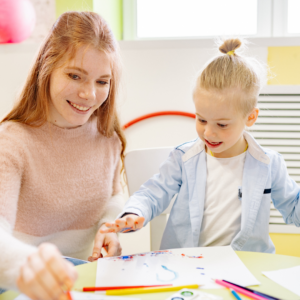
 Preschool is about much more than early academics. As children play and learn alongside others, they practice important social skills that help them communicate, cooperate, solve problems, and build friendships. These everyday classroom experiences give preschoolers opportunities to become confident, considerate members of a community.
Learning to Share, Take Turns, and Cooperate
Young children are still learning that other people have ideas, feelings, and needs of their own. Preschool provides regular opportunities to practice sharing materials, waiting for a turn, and working together during play.
For example, a teacher might encourage two preschoolers to build a block tower together or help children take turns during a group game. These experiences teach children how to participate in activities with others while learning that cooperation can make play more enjoyable.
Families can reinforce these skills at home by encouraging children to take turns during board games, share toys with siblings, or help with simple group tasks. Use clear directions such as, “First, let your friend have a turn. Then it will be your turn.”
Practicing Communication and Expressing Feelings
Preschoolers are also developing the language they need to communicate their thoughts and emotions. In a classroom setting, children learn to ask for help, express preferences, join conversations, and use words to describe how they feel.
Teachers can help children identify emotions and practice appropriate ways to respond. A child who feels frustrated might learn to say, “I need help,” instead of grabbing a toy. These small moments help preschoolers develop self-awareness and emotional regulation.
Families can support this growth by naming emotions and modeling respectful communication. Try saying, “It looks like you feel frustrated. Let’s use our words to tell your friend what you need.”
Building Confidence Through Positive Relationships
Children develop social confidence when they feel safe, accepted, and supported. At Kids ‘R’ Kids, the “Hug First, Then Teach” philosophy emphasizes nurturing relationships as an important foundation for learning. When children trust their teachers and feel secure, they can become more comfortable participating, trying new things, and connecting with others.
Interested in helping your child develop strong social skills in a caring environment? Inquire about Kids ‘R’ Kids Learning Academy of Medlock Bridge preschool programs to learn how nurturing teachers and engaging group experiences can help your preschooler build friendships, confidence, communication skills, and a positive foundation for future learning.